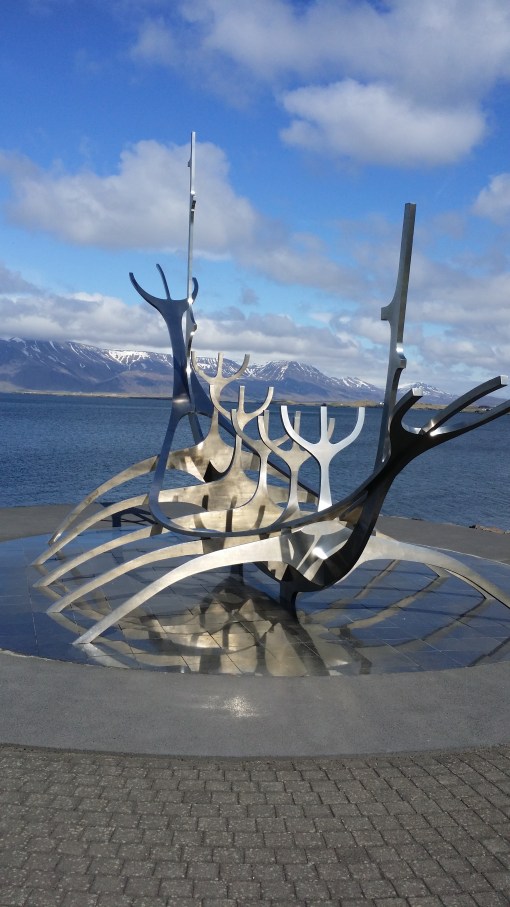
A sculptor, Jon Gunner Arnason, created this Viking ship in Reykjavik, Iceland ‘ s harbor. He states, “We all have our fantasy boats, vessels that we dream of sailing away in, into the dream.”
I’m realizing a fantasy of landing in an extreme and captivating country which I knew nothing about. The language, history, land and lifestyle are waiting for me to discover.
VIKING SAYING (Havamel)
No man should call himself clever but manage his mind. A sage visitor is a silent guest. The cautious evades evil. Never a friend more faithful, nor greater wealth than wisdom.
Ute Indians spent time in this area of the Colorado Rockies from the prehistoric era until the region was overcome with prospectors, homesteaders and hunters. Due to a long campaign by Enos Mills this sublime landscape was preserved as America’s tenth national park on January 26, 1915. Come celebrate Rocky Mountain National Park’s one hundredth birthday this fall, September, 2014.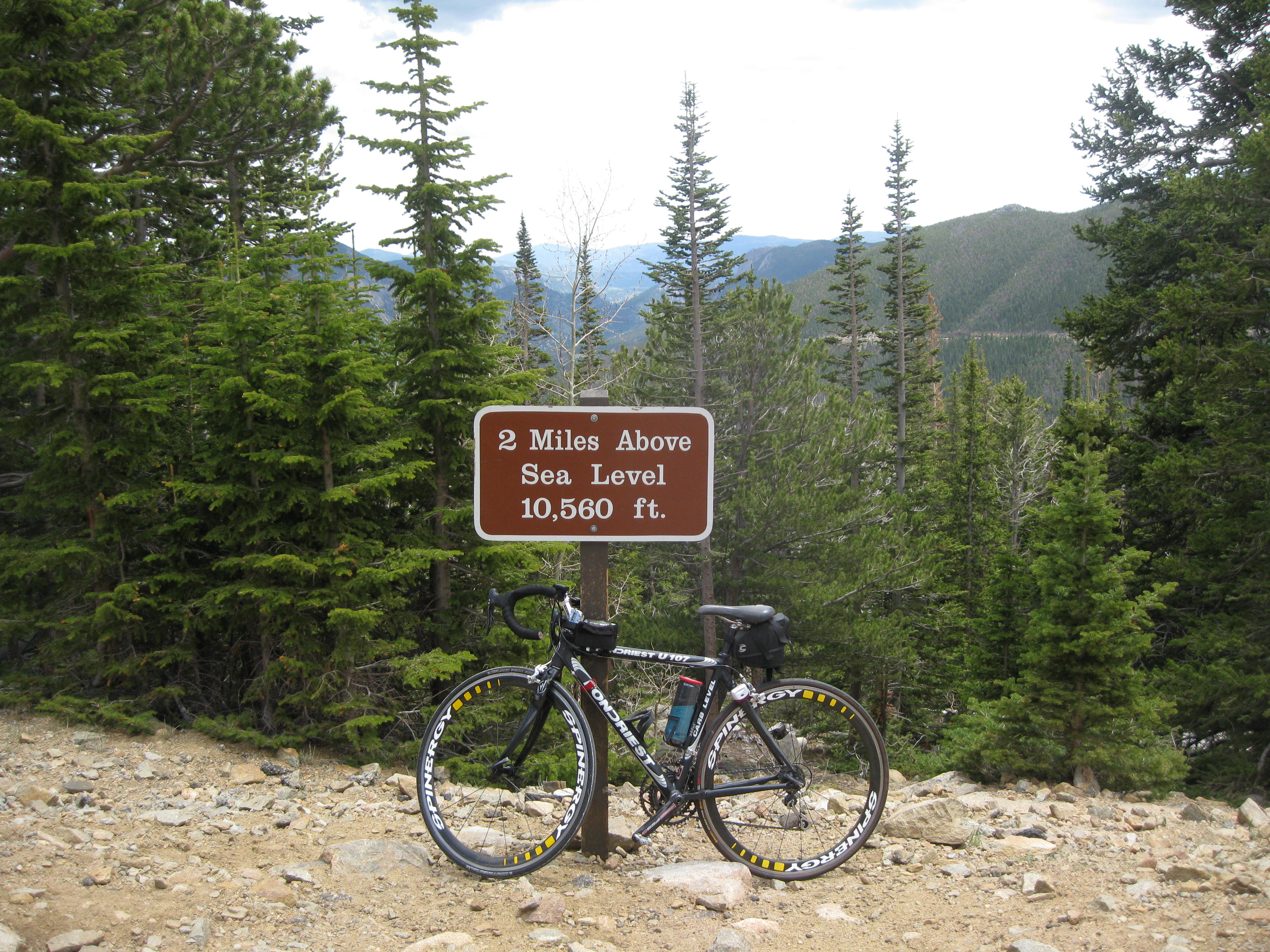
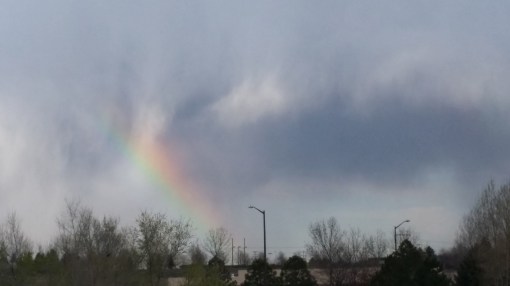
Rainbows make me stop and smile. Since the year 1000 scholars understood these brilliant colors arrive due to sunlight bent or refracted by water drops. Many people persist in believing rainbows bring wealth or a bridge to heaven, however. By 1704, Sir Isaac Newton proved white light is made up of all the colors in the rainbow. The earliest people in Colorado, the Ute Indians, worshipped Mother Earth and Father Sky. Naturally they believed rainbows were a powerful sign from above.
The Crazy Horse Monument in the Black Hills of South Dakota is the world’s largest sculptural undertaking. It has been under construction since 1948. The mountain carving honors the Lakota leader, Crazy Horse. Located a short drive from Mt. Rushmore, Lakota Chief Henry Standing Bear commissioned Korczak Ziolkowski to create a sculpture which reminds white men that the red man also has great heroes.
If you are fortunate enough to see this work in progress, you will also be treated to the Indian Museum of North America and, during the summer, a laser light show highlighting cultural diversity as well as harmony among all races.
You may not see the finished monument for another fifty years, but the scale model is inspiring. The sculptor’s vision has endured for thirty two years after his death in 1982. His children and wife continue working and collecting donations. They are strong believers in the free enterprise system and have refused all offers of government funding.
Our first sight of Crazy Horse was from the Mickelson Bike Trail. What a treat it was to reach the monument by our own power.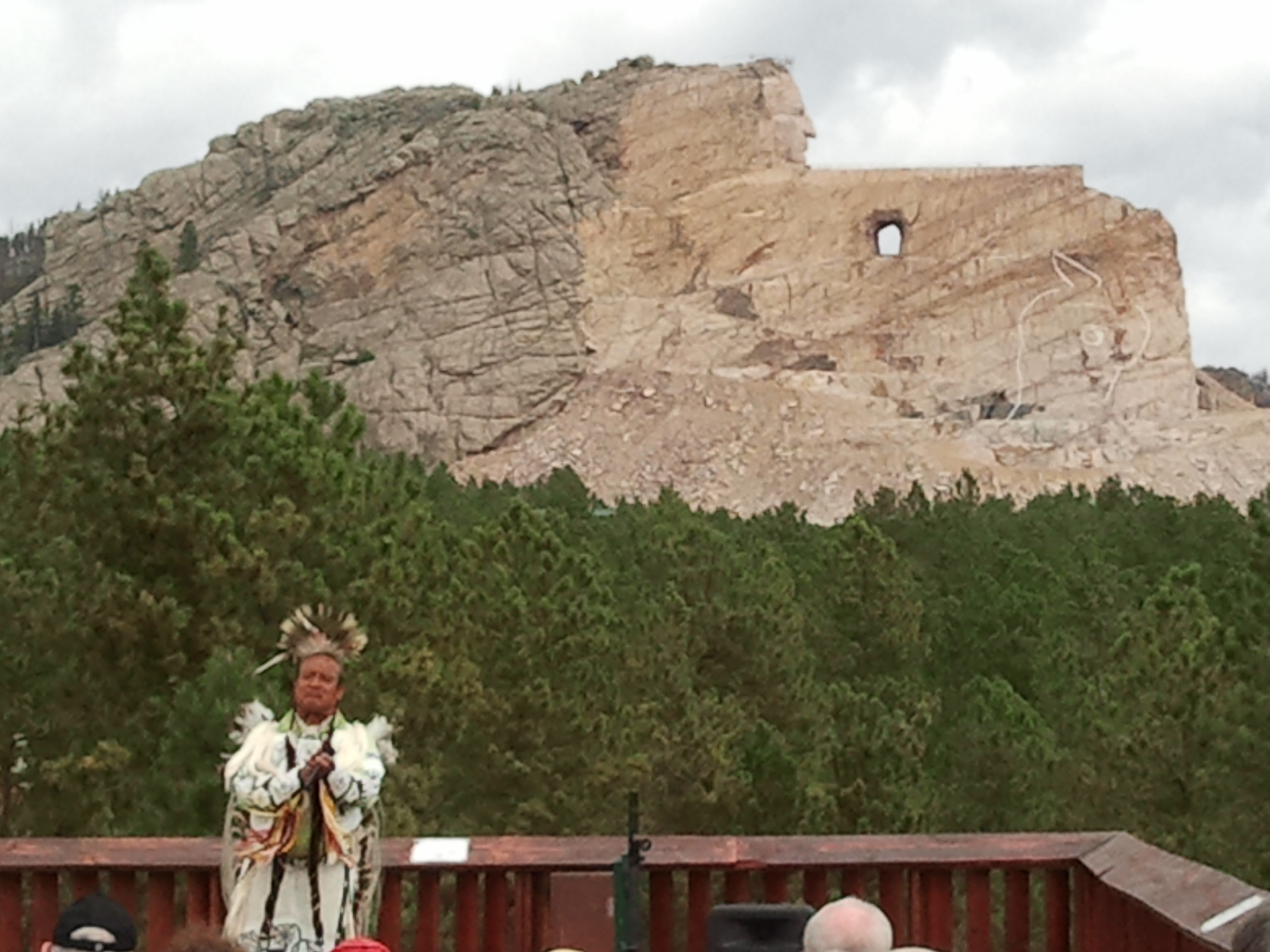
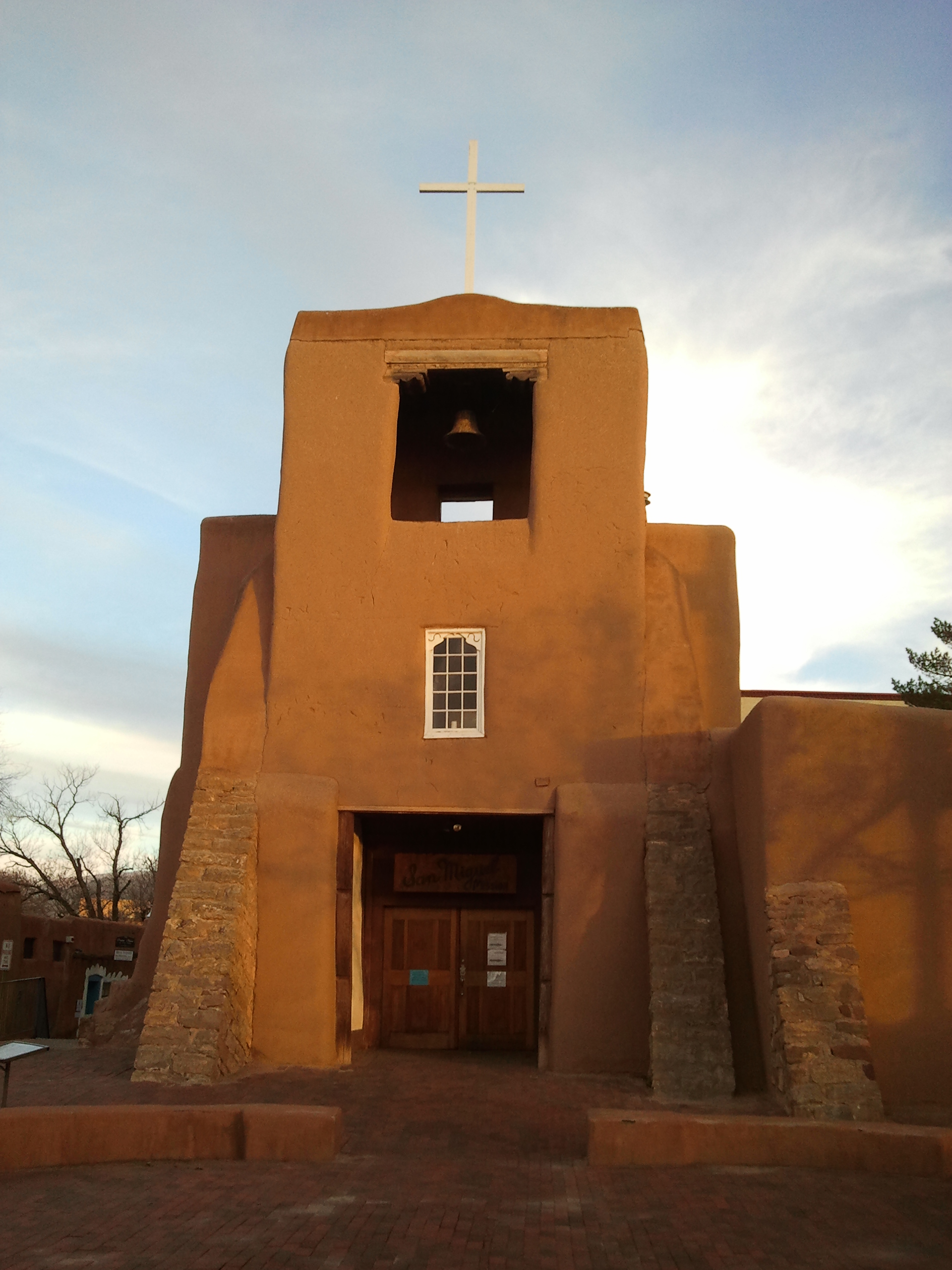
A rustic sign in front of San Miguel’s Chapel states “the oldest church structure in America”. But is it?
This adobe church was originally built in Santa Fe in 1610, by Tlaxcalan Indians and Catholic Padres. Santa Fe, New Mexico became part of the United States in 1848, after the Mexican-American War.
Prior to 1610 there were buildings used for religious purposes. Taos Pueblo built between 1000 and 1450, contains kivas used for religious purposes and has been continuously inhabited up to the present.
Acoma Pueblo was built between 1000 and 1200 and also contains kivas. Despite the Spaniards attempt to destroy the Pueblo and all of its people in 1598, there are still Acoma Indians living there in a traditional manner. Thousands of tourists visit this “SkyCity” near Albuquerque, New Mexico every year.
Whenever Americans research the history of their country, they must remember all of the people who lived within its boundaries and continue to worship sacred sites.
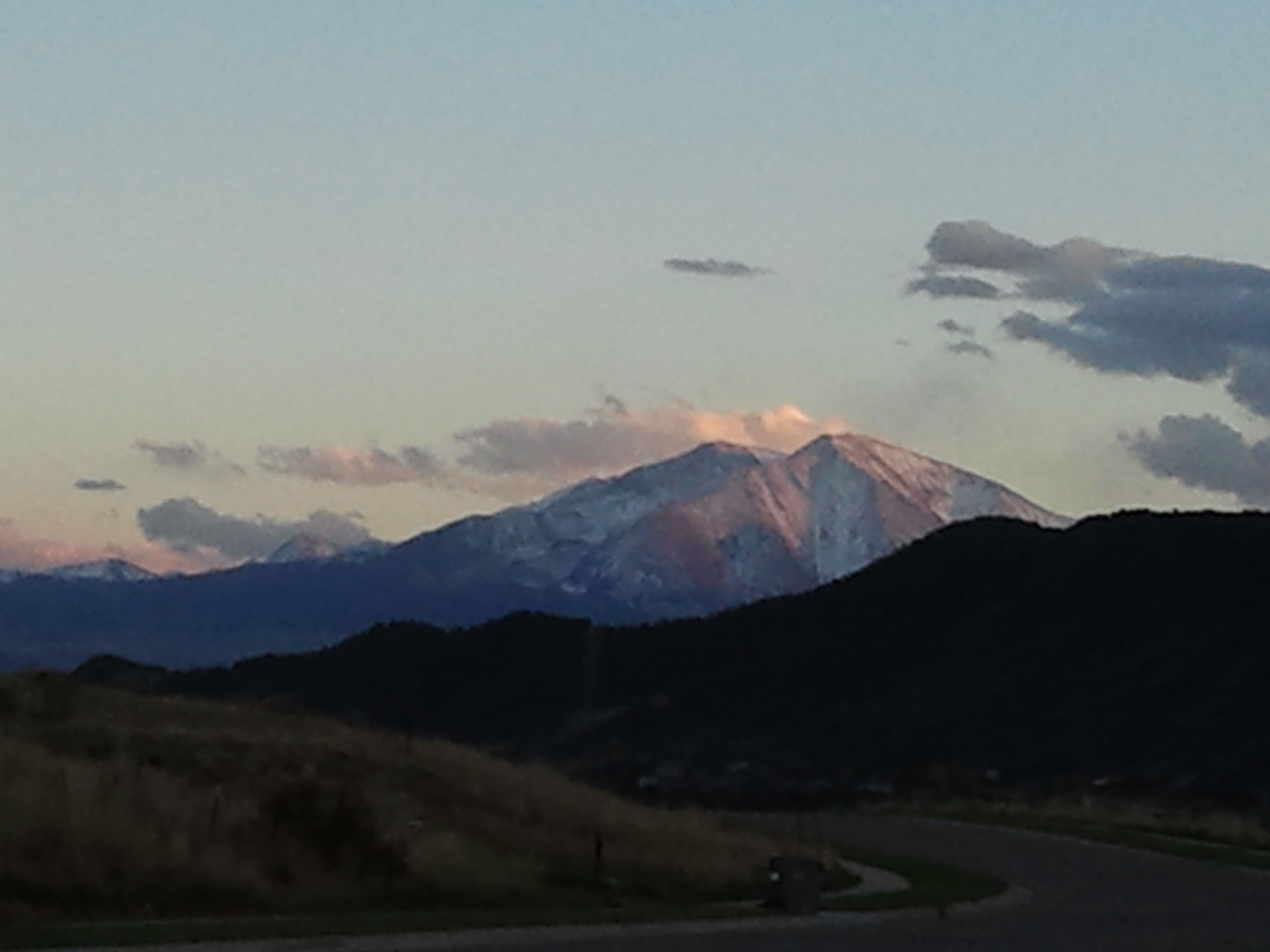
One of Colorado’s jewels is a bold mountain with twin peaks standing at the extreme end of the Elk Range in Central Colorado. Snow clings to the upper slopes for six months each year and reflects the colors of the sunrise and sunsets in the Crystal and Roaring Fork River Valleys. Travelers can easily spot this showy peak from fifteen miles north due to the 6,000 feet it rises above the valley. The earliest inhabitants of this area, the Northern Utes, thought of the mountain as The Mountain of Rainbows. They were grateful for the moisture the mountain shed and the lush flora which survived in the surrounding drainages. They survived on the animals which came to feed near the mountain.
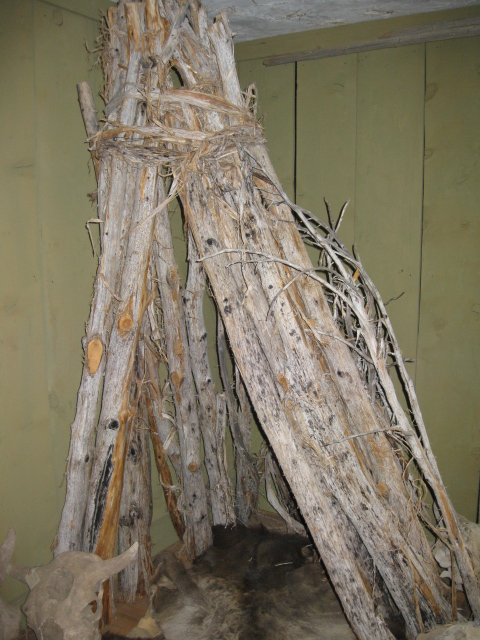
This wickiup was reconstructed at the White River Museum in Meeker, Colorado to display how several of the Indian tribes created temporary shelters. They were usually no more than three feet high and were covered with skins. Hot coals or stones were placed in the center. Native American people curled up under their buffalo robes and survived extreme conditions in these tiny huts.
Do you have any stories about outdoor forts or homemade shelters in which you and your friend spent the night? What would people bring with them for an overnight camping trip in the twenty first century?
There is no clear record of when the Northern Ute people acquired horses. In 1640 some Eastern Utes escaped from Santa Fe where they were kept prisoner by Spanish invaders. They took horses north with them. Imagine the surprise of their band as they rode into their former life as impossibly tall spirits.
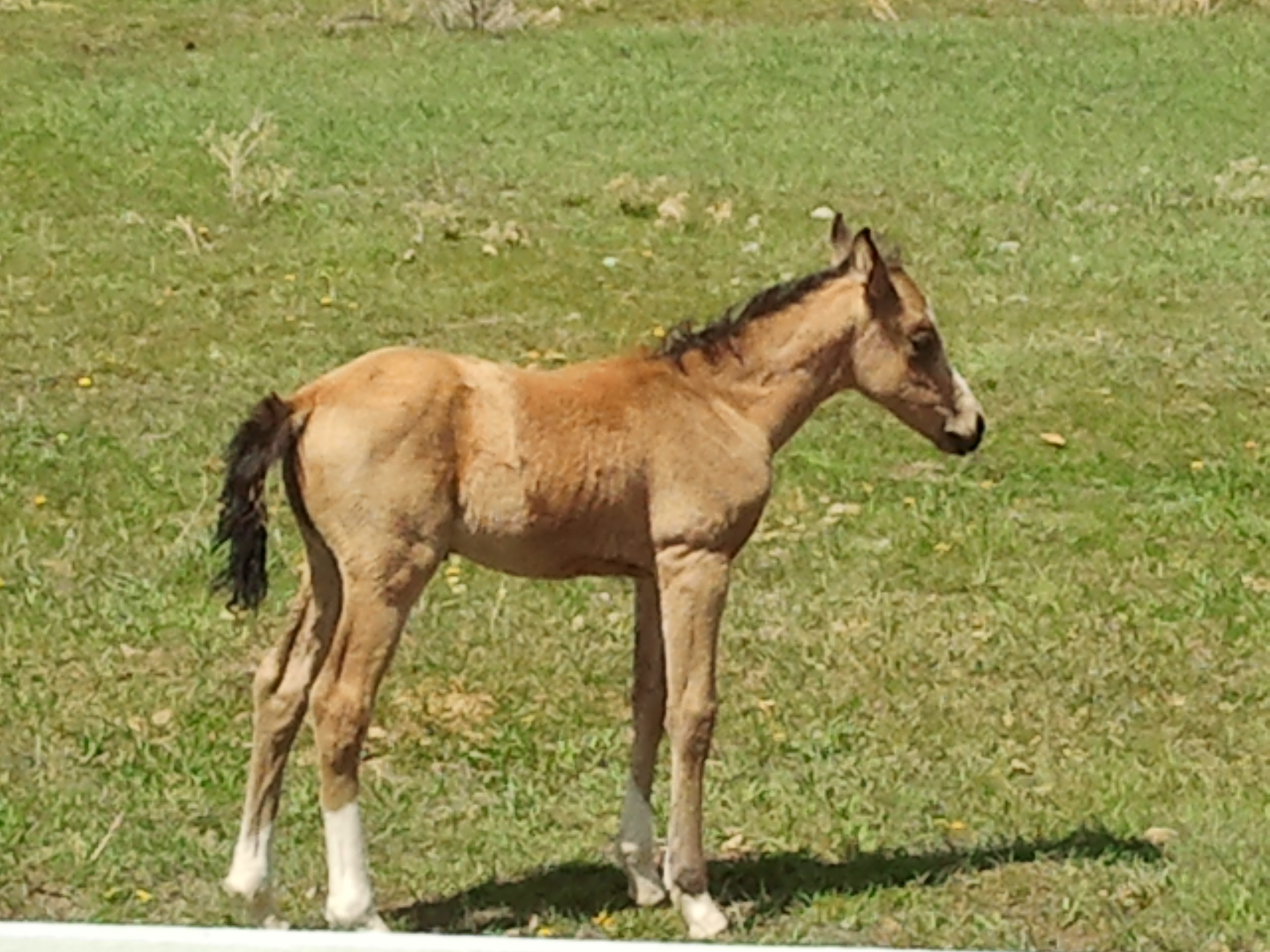
The Southern Utes continued to capture Spanish horses when possible, but these would remain extremely rare in the Northern areas of what is Colorado today. Fortunately the horse thrived well on the native grasses of the valleys and plains and naturally increased in number. It must have felt miraculous when the first foals were born to a band.
As warring bands of Comanches, Apaches and Southern Utes displayed their power on horses, it became clear that all indigenous people needed these speedy, sturdy and adaptable beasts.
By 1700, it was likely that Northern Utes had traded for or stolen their own horses. For the first time Ute people could carry larger loads of hides, meat, baskets and hunting tools. With horses, Utes could hunt buffalo, defend themselves against attackers, scout for game and transport shelters.
Today, as I ride a bicycle through rural Colorado, I also marvel at newborn horses. Possibilities arise as this shaky creature quickly gains strength.
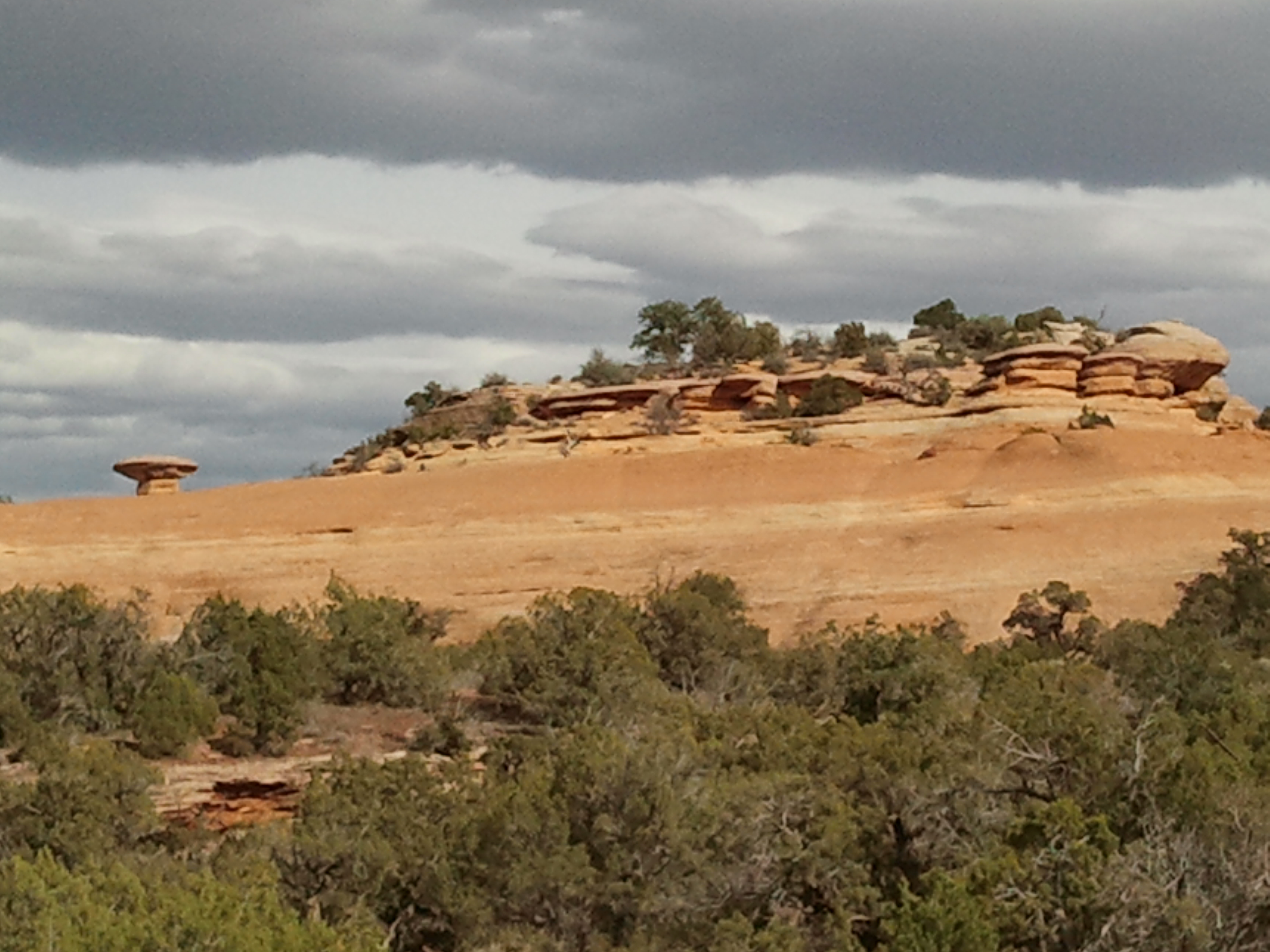
Although the canyons of the Uncompahgre Plateau began with an uplift four million years ago, they continue to be shaped by wind and water today. Every time you walk the unique trails of the McInnis Canyons National Conservation Area in Fruita, Colorado you will discover new fanciful structures, rock windows and caves, ancient rock art from the Fremont culture and secluded slots. There’s no mystery as to why the Ute Indians chose to camp, hunt, and gather food among the protective arms of the Colorado River canyons.
In the novel, Sun on Snow, a pioneer girl and Northern Ute boy play house in a cave inhabited only by small animals. They come to appreciate the differences in their writing and communicating techniques as well as the joy of pretending they are carefree and self-sufficient.
I’m sure your steps will also feel lighter and your heart sturdier as you experience a hike back in time.
 journeyswithjosie